Founding Mothers · Article 05
Founding Mothers tells the stories of the decisions, people, and objects that built the industries we wear, carry, and inhabit. Each article is grounded in verified historical fact and written to the standard of the best narrative business history: cinematic, immersive, and honest about what we know and what we don’t. The series finds its subjects in the places most business history overlooks — in tailors’ workshops, patent offices, charity ballrooms, and quiet rooms where one person decided, with no guarantee of outcome, to try something no one had tried before.
The Cream in Her Hand
She dressed carefully. She always dressed carefully — not as vanity but as argument: if she looked like this, the product worked.
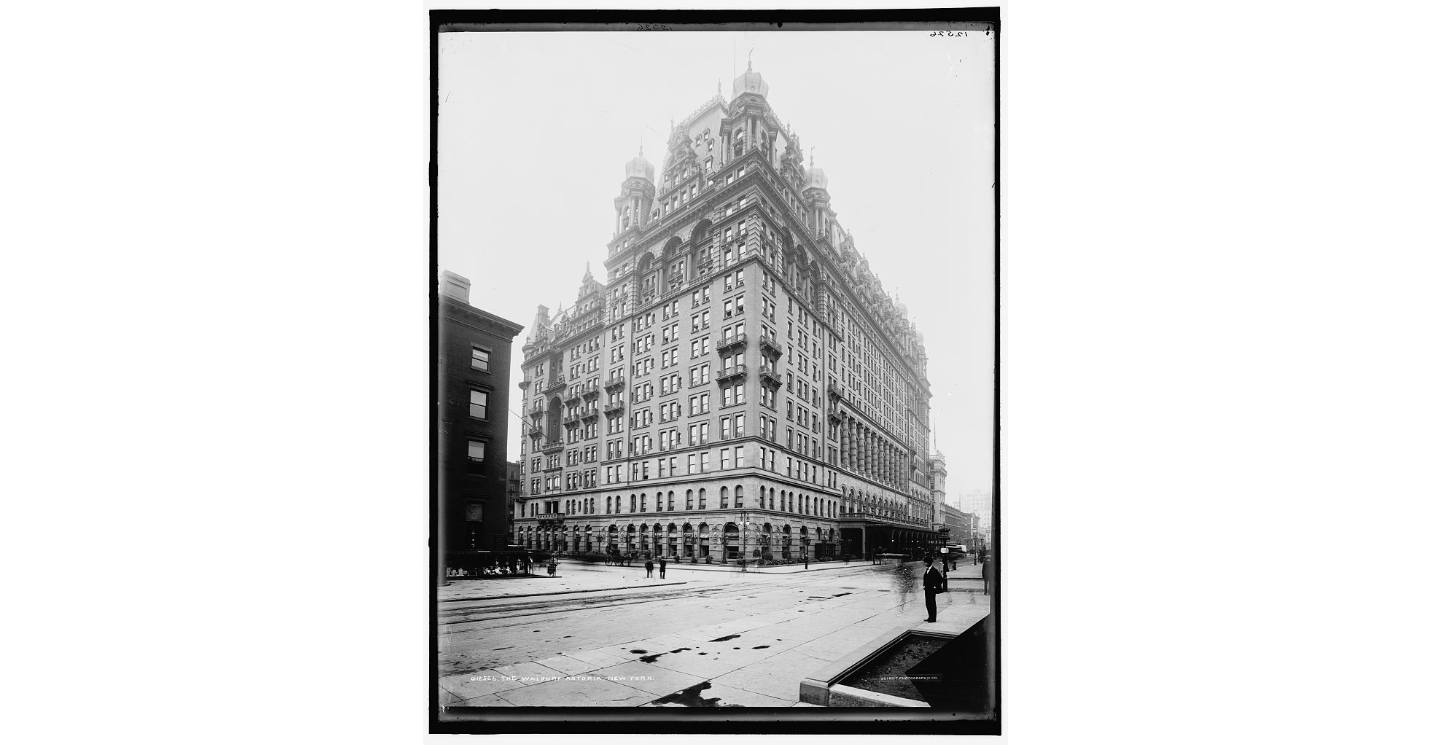
Autumn 1948. The ballroom of the Waldorf-Astoria, mid-morning, the hour when a charity luncheon is still assembling itself. White tablecloths. Hired orchids. The particular hum of women who have arrived somewhere they are meant to be seen. Estée Lauder, thirty-nine years old, moved through the room with a small leather case of creams and the absolute certainty that she was about to change the economics of beauty retail — though she would not have described it in those terms. She would have described it, if pressed, as being very good at her job.
She was not a guest at this luncheon. She was not a vendor. She had no booth, no table assignment, no invitation to sell. What she had was a case of Super Rich All Purpose Creme, a sample supply that had cost her more than she could comfortably afford to give away, and the understanding — arrived at over twelve years of demonstrating creams in beauty salons and hotel lobbies and wherever women gathered — that there was only one thing more powerful than an advertisement: a woman telling another woman that something worked.
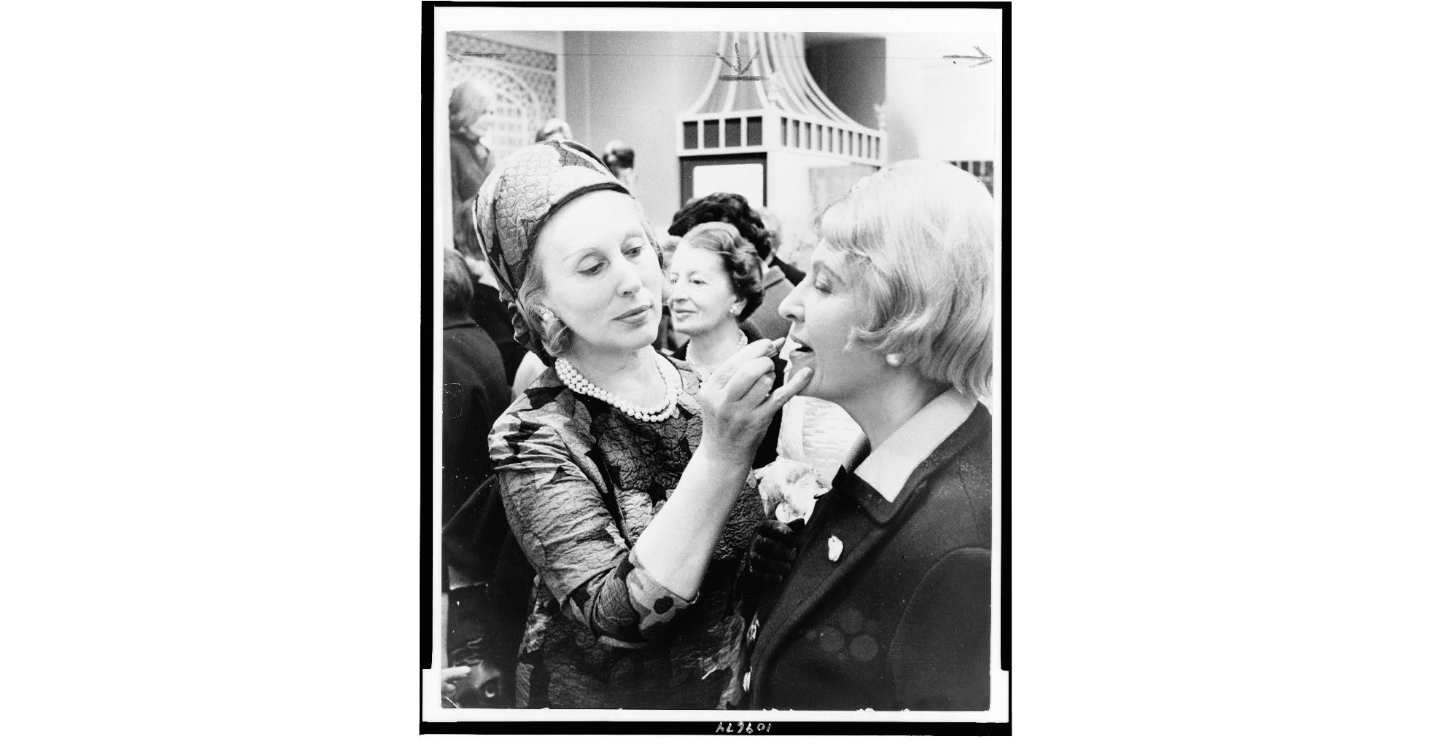
She found the first opening. A woman seated at a corner table, one wrist resting on the linen. Estée moved toward her with the particular combination of warmth and intention that had always been her signature — the quality that made strangers feel simultaneously chosen and fortunate. She introduced herself. She unscrewed the lid. She asked if she might show her something.
She pressed a small amount of cream onto the woman’s wrist and worked it in. Not placed it. Worked it. There was a technique to this — the particular upward motion she had practiced thousands of times, the slight pressure at the pulse point, the moment you waited for the woman’s expression to shift from polite tolerance to genuine surprise.
It shifted.
She moved to the next table. Then the next. By the time the luncheon was seated, she had demonstrated the cream to thirty women. By the time it concluded, she had pressed a sample jar into the hands of every woman she could reach, with the same instruction each time: take it home, use it tonight, tell me what you think.
Three days later, women began walking into Saks Fifth Avenue asking for products that Saks Fifth Avenue did not carry.
The Laboratory on the Corner
To understand what Estée Lauder was doing in that ballroom, you have to understand where she came from — and what she had grasped, from the very beginning, that her competitors had not.
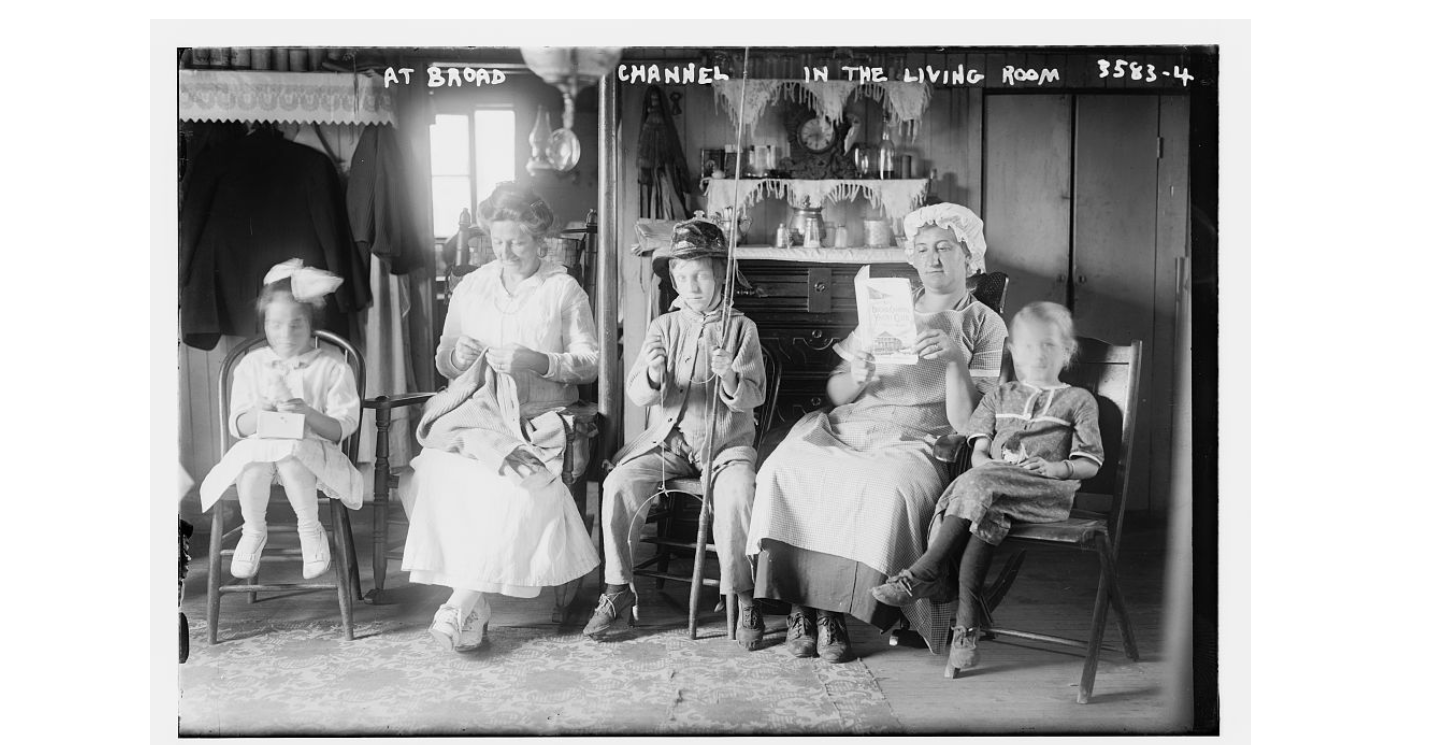
She was born Josephine Esther Mentzer in 1908, in Corona, Queens, the younger child of Max Mentzer, a hardware merchant who had emigrated from Central Europe, and Rose Schotz Rosenthal, who had made the same journey from roughly the same part of the world. The neighbourhood was working-class and immigrant-dense, the household economics managed with the precision that immigrant households everywhere apply to the problem of not quite enough. Beauty, in that household, was not luxury. It was maintenance: the management of appearance as a form of competence, the signal that whatever was happening on the inside, you had your affairs in order.
Her mother’s brother — John Schotz, a chemist — ran a small laboratory above a building a few blocks away. The young Josephine Mentzer spent hours in that room watching him blend oil of elder and white petroleum and various emollients into creams that he sold, modestly, as skin preparations. She was not passive in her observation. She asked questions. She read labels. She developed an understanding, early and fundamental, that a cream was a formula — which meant it could be improved, perfected, replicated.
She began selling Schotz’s preparations in beauty salons in her late teens and early twenties, where the captive audience of women under hairdryers was the closest thing the era had to a targeting algorithm. She married Joseph Lauter in 1930 (the name later anglicised to Lauder), divorced him in 1939, worked through the years of the war in a period she rarely discussed in interviews, and remarried Joseph in 1942. In 1946, Estée Lauder Cosmetics was incorporated — Estée handling sales and demonstration, Joseph handling manufacturing.
The problem, by 1947, was distribution. Helena Rubinstein and Elizabeth Arden owned the prestige counter. Revlon owned the drugstore. The department store buyer held the only key that mattered, and Estée had knocked on those doors. She knew exactly what ‘no space’ sounded like.
Engineering the Demand
The buyer at Saks Fifth Avenue told her there was no room on the counter. Estée took the elevator down.
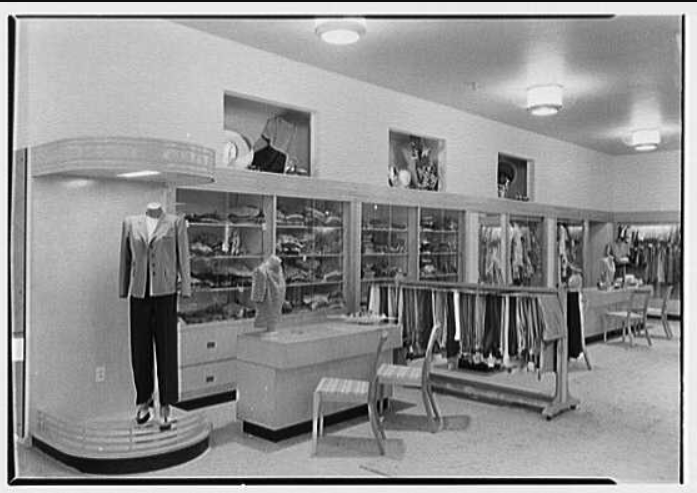
What she decided, somewhere between the buyer’s office and the lobby, was the thing that changed beauty retail permanently. She could not buy her way in. She could not wait for an opening that was not coming. What she could do was create demand outside the store — enough demand that the store would have no choice but to respond.
She had been working the charity luncheon circuit for months already, demonstrating at hotel ballrooms and benefit lunches and anywhere she could position herself near women who could afford to buy what she was selling. Now she intensified it. The Waldorf-Astoria. The Hotel Savoy-Plaza. The charity balls that marked the New York autumn social season. At each one, the same gesture: the cream on the wrist, the sample in the hand, the instruction to try it at home and tell her what they thought.
This was not random generosity. She was working a specific geography: the women who lunched at the Waldorf were the women who shopped at Saks. She was building demand at the source for a product that was available nowhere. When those women walked into Saks and asked for Estée Lauder — as they increasingly did, insistently, by name — they were being told that they had been led somewhere the store could not yet take them.
The buyer at Saks eventually took a meeting.
The first order is widely reported as $800 — a test, a minimum commitment, a way of quieting the women who kept asking. Estée sold it out in two days. Saks reordered. The counter that had not existed three weeks earlier could not keep up with the queue.
The Mechanic
It was in the years following the Saks account — the late 1940s into the early 1950s, when the business began to grow faster than one woman could manage by hand — that the gift-with-purchase took its deliberate, codified form.
The logic was simple enough to state and difficult enough to replicate that no one in the prestige market had thought to try it. With every purchase, a gift: samples of new products, a small bag, a travel-sized cream. The mechanism this set in motion was three-stage. The woman who bought one cream left the counter with three products in her bag. She tried the three. She returned for the two she loved. She told her friends about the one that changed everything.
Acquisition, retention, referral — in a single gesture, at the moment of sale.
Estée’s own summary of her marketing philosophy, repeated across decades of interviews: Telephone, telegraph, tell-a-woman. She understood what the advertising industry — which was, in the early 1950s, beginning to construct the great machinery of mass persuasion — had not yet integrated into its models: that for certain products, in certain categories, the most efficient acquisition channel was a satisfied customer with a gift in her bag and a friend who trusted her opinion. The gift was the activation mechanism. The friend was the channel.
Youth Dew, launched in 1953, was the proof. A bath oil formulated to double as a perfume — Estée’s intervention into a fragrance category where expensive bottles were still bought primarily as gifts by men for women, meaning women waited to be given what they wanted. Youth Dew was priced to permit self-purchase. It spread through the gift-with-purchase loop as a sample, and through word-of-mouth as a discovery. Tens of thousands of units in its first year. The company that had begun with a single department store account in 1948 was now, unmistakably, an institution.
The Loop Is Still Running
The gift-with-purchase is estimated to drive billions of dollars in cosmetics sales annually. Every prestige beauty brand that operates a department store counter uses a version of it. Sephora’s points system. Ulta’s reward tiers. The subscription box that arrives with three items you did not order — all of them structural descendants of the mechanic Estée Lauder invented in a Manhattan ballroom because she had no other option.
The software platforms that now run these programmes — Klaviyo, Iterable, Yotpo, Attentive — are the institutional embodiment of what she did by hand. The welcome flow that sends a free sample with the first order is the sample on the wrist. The replenishment email at day twenty-eight is the counter follow-up she would have made in person. The referral code embedded in the review request is the friend she trained her customers to become. The algorithm runs the loop. The loop is hers.
In 1998, Time magazine named Estée Lauder the only woman on its list of twenty business geniuses of the twentieth century. She was not there because she invented a face cream. Plenty of people had invented face creams. She was there because she had invented a relationship — between a brand and a customer, mediated by a gift, sustained by a loop of trial and trust and word-of-mouth. That relationship scaled into a company that, as of 2024, operates in more than 150 countries.
She died in 2004. The samples are still going out.
One man in nineteenth-century Montana once tried to corner the copper market and set in motion the panic that proved America needed a central bank. One tailor in Reno, Nevada, once reached for a rivet he used on horse blankets and pressed it through the pocket corner of a pair of trousers. One woman in a Manhattan ballroom once pressed a small jar of cream into a stranger’s hand and said: try it.
None of them had a plan. All of them had a problem and the nearest available solution. The solutions outlasted them. They always do.
Sources
- Estée Lauder, Estée: A Success Story (Random House, 1985).
- Lee Israel, Estée Lauder: Beyond the Magic (Macmillan, 1985).
- Kathy Peiss, Hope in a Jar: The Making of America’s Beauty Culture (Metropolitan Books, 1998).
- Estée Lauder Companies corporate history.
- Time magazine, ‘Builders & Titans,’ 1998.
- WWD retrospectives; Wikipedia.
- All photographs: Library of Congress, Prints & Photographs Division.