Historical Context
In Gilded Age New York, social position was not merely a matter of prestige — it was the primary currency of power for women who had no formal access to business, politics, or law. Caroline Schermerhorn Astor built and maintained an institution, the Four Hundred, that made her the most powerful unofficial authority in the city. Its collapse was swift, nearly invisible, and total.
Winter 1895. Fifth Avenue and 65th Street, Manhattan. The thermometer outside had read twelve degrees at sundown. Inside, beneath the crystal chandeliers that had cost more to import than most men earned in a lifetime, the temperature hovered at precisely seventy degrees.
The orchestra had been rehearsing for three weeks. The menu had been approved by Mrs. Astor personally. Every detail — from the arrangement of roses in the entrance hall to the precise shade of white gloves worn by the servants — had been subjected to the scrutiny of a woman whose sole occupation for forty years had been deciding who mattered.
Caroline Schermerhorn Astor stood at the top of the ballroom staircase and surveyed the crowd below. The Four Hundred, she called them — though the actual number was closer to three hundred and ninety-eight, a calculation she maintained with the precision of a general counting troops. These were the families that New York society recognized as acceptable. Not the wealthiest. Not the cleverest. These were acceptable because she had decided they were acceptable.
A woman in an emerald gown stood alone near the orchestra, speaking to no one. Even from a distance, Mrs. Astor could see the calculation in her posture, the desperation barely concealed beneath the smile. This woman — a railroad wife, respectable enough, but new money — had been waiting twenty years for an invitation to this ball. She had hosted dinners, attended charity functions, donated to the right causes. And finally, finally, she had been invited.
The invitation, Mrs. Astor understood, was the only thing this woman would remember for the rest of her life.
At that moment, in the winter of 1895, Mrs. Astor could not have imagined that within fifteen years, the system that had produced such power would be obliterated. She could not have known that the Four Hundred would scatter like ash. She could not have known that she was at the absolute apex of her power, and that everything below would soon give way.
The Mathematics of Exclusion
Caroline Schermerhorn had been born into a world where social position was everything. Her family had money — the kind that came from shipbuilding and land, solid old money that had survived wars and panics. But more valuable than the money was the position. The Schermerhorns were Dutch, which meant legitimacy, which meant a kind of social authority that could not be purchased.
When she married William K. Astor, she had been marrying into more money — the fur trade fortune, the real estate empire that stretched across Manhattan. But more importantly, she had been marrying into a name. And once married, she had become the custodian of that name, the guardian of the Astor position in New York society.
The rules she enforced were simple but absolute. Divorce disqualified you, regardless of your wealth. Working for a living disqualified you. Marrying someone foreign without proper credentials disqualified you. Having parents in actual trade — below the level of finance and real estate — was a permanent stain. The principle was consistent: the Four Hundred existed to maintain the Four Hundred.
Mrs. Astor did not see herself as cruel. She saw herself as maintaining standards. Without standards, there was chaos. Without exclusion, there was no distinction. The invitation to Mrs. Astor's ball was valuable because most people would never receive one.
She had the ballroom capacity of exactly four hundred. She had the family name that conveyed authority. Most importantly, she had been doing this for so long that her decisions had accumulated into what seemed like immutable law. A woman named Alva Vanderbilt had challenged Mrs. Astor's authority in the 1880s, hosting a competing ball. But Alva had eventually capitulated. She had realized that challenging Mrs. Astor was futile. Mrs. Astor did not merely have power — she was power.
When the Walls Began to Crack
What Mrs. Astor did not understand — what could not be understood from within the ballroom at 65th Street and Fifth Avenue — was that the world was changing around her. The Four Hundred had been built on a premise that seemed unshakeable: that birth and tradition mattered more than money. But by the 1890s, that premise was becoming obsolete.
The railroads were creating fortunes that dwarfed the old money. The steel industry was producing men richer than entire families of Astors and Vanderbilts combined. And these men did not care if Mrs. Astor invited them to her ball. They had their own power. They did not need her validation.
The newspaper society columns, which had once dutifully reported on whom Mrs. Astor had invited and whom she had excluded, were beginning to devote more space to other events, other figures. Mrs. Astor's decisions still mattered to the families in the Four Hundred. To everyone else in New York, they were beginning to seem quaint.
Then came the moment Mrs. Astor could not control. In 1906, the architect Stanford White was murdered at Madison Square Garden by the husband of an actress. The scandal consumed New York society's attention for months. The trial revealed affairs, betrayals, the hidden lives beneath the respectable surfaces. For the first time, the American public became fascinated by the personal lives of the wealthy — not their social position, but their actual behavior.
The Four Hundred had been based on the premise that certain people were simply better than others. The Stanford White trial had revealed that everyone, regardless of social position, was capable of moral failure.
A society figure named Evelyn Nesbit — a showgirl and model, excluded from Mrs. Astor's circle for the simple reason that she was a working actress — became the public face of the scandal. The American public did not care about Mrs. Astor's standards. The public was riveted by Evelyn Nesbit. Mrs. Astor's ballroom, which had once been the center of New York's attention, suddenly seemed provincial.
The Unraveling
Mrs. Astor lived until 1908, but her power did not survive much past 1906. Her health deteriorated rapidly. Her mind, which had once been occupied with the complex mathematics of social inclusion, began to fail. She spent her last years in the Fifth Avenue mansion, increasingly removed from the social life she had once commanded.
More importantly, she was no longer relevant.
The Four Hundred had been an institution based entirely on Mrs. Astor's authority. Once her authority was rendered irrelevant by the changing world, the entire structure began to collapse. The younger members of the Four Hundred began to realize something their parents had not: the social position they had fought so hard to maintain was inherently fragile. It was based on nothing but consensus. The moment people stopped caring whether they were invited to Mrs. Astor's ball, the entire structure evaporated.
By 1910, only two years after Mrs. Astor's death, the Four Hundred had ceased to exist as a meaningful social category. Balls continued to be held. But the exclusivity that had been the foundation of Mrs. Astor's power no longer meant anything. The families that had once fought desperately for inclusion found that they could create their own social circles, host their own events, establish their own authority. They did not need Mrs. Astor anymore.
The Woman Who Waited
There is a photograph from one of Mrs. Astor's balls in 1900, taken by a society photographer. In the background, barely visible, is a woman in an elaborate gown, standing alone. Her name was Margaret Whitmore. She was the wife of a successful merchant — successful enough that she had entertained presidents, served on charitable boards, and by any rational measure should have been acceptable.
But she had never been invited to Mrs. Astor's ball. She had waited, every year, for the invitation. She had hosted dinners that no member of the Four Hundred attended. She had donated money to the causes that Mrs. Astor supported, hoping that charity might eventually convert into acceptance. Nothing worked.
By 1912, Margaret Whitmore no longer needed to wait for Mrs. Astor's invitation. Mrs. Astor had been dead for four years. The Four Hundred had ceased to be anything but a historical footnote. Margaret Whitmore could host her own ball now. She could create her own social circle. The entire structure that had excluded her had collapsed.
Her exclusion from the Four Hundred, which had once seemed like the tragedy of her life, had become irrelevant. But the years she had spent waiting for acceptance had not become irrelevant. They were simply gone.
The Legacy of Exclusion
What killed Mrs. Astor's power was not a scandal, not a dramatic challenge, not a revolution. It was obsolescence. The world had changed, and the foundation of her authority — the premise that social position was the highest form of power in New York — had become untenable.
The Four Hundred had been an institution designed to resist change. The entire point of Mrs. Astor's carefully maintained guest list was that it remained static. The same families, year after year, maintained their position. Change was the enemy. Adaptation was weakness.
But institutions that resist change inevitably collapse when the world changes anyway. Mrs. Astor could exclude the railroad magnates and the industrial titans, but she could not prevent them from becoming more powerful than she was. She could exclude women from working professions, but she could not prevent professional women from becoming influential. She could exclude scandal from her ballroom, but she could not prevent the American public from becoming fascinated by it.
Mrs. Astor died on November 30, 1908, at the age of seventy-seven. Even the obituaries had a quality of nostalgia — she had represented something that was already becoming historical. The new century would be built on different premises. Wealth would still matter. Influence would still matter. But the notion that a woman could wield absolute power simply by deciding whom to invite to her ball — that was obsolete.
Power built on nothing but collective agreement is power that can evaporate the moment collective attention shifts elsewhere.
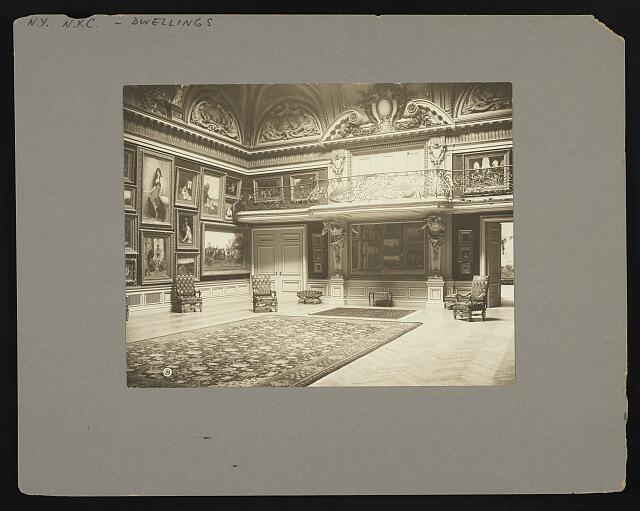
By 1920, the Four Hundred was something that historians wrote about, not something that mattered. The ballroom where Mrs. Astor had held court still stood — though it would eventually be demolished to make way for more profitable real estate. The guest lists were preserved in archives. The photographs documented an entire social world that had been built on nothing but consensus and was destroyed by nothing more than the withdrawal of consensus.
The ball that had seemed so important, the careful choreography of inclusion and exclusion that had been her life's work, had been broken not by rebellion but by irrelevance. And in that obsolescence lay a lesson American society would need to learn again and again: that institutions built to resist change will eventually be overtaken by it.
Caroline Schermerhorn Astor, Alva Vanderbilt, Stanford White, and Evelyn Nesbit are historical figures; their roles and the events described are documented. Margaret Whitmore is a composite figure representing the documented class of women who sought inclusion in Mrs. Astor's circle and were refused. The ballroom scene is reconstructed from period accounts. Sources: Eric Homberger, Mrs. Astor's New York (Yale University Press, 2002); New York Times society archives, 1890–1910; Town Topics (contemporary society journal); The Social Register (New York), 1890–1920; Edith Wharton, The Age of Innocence (1920).